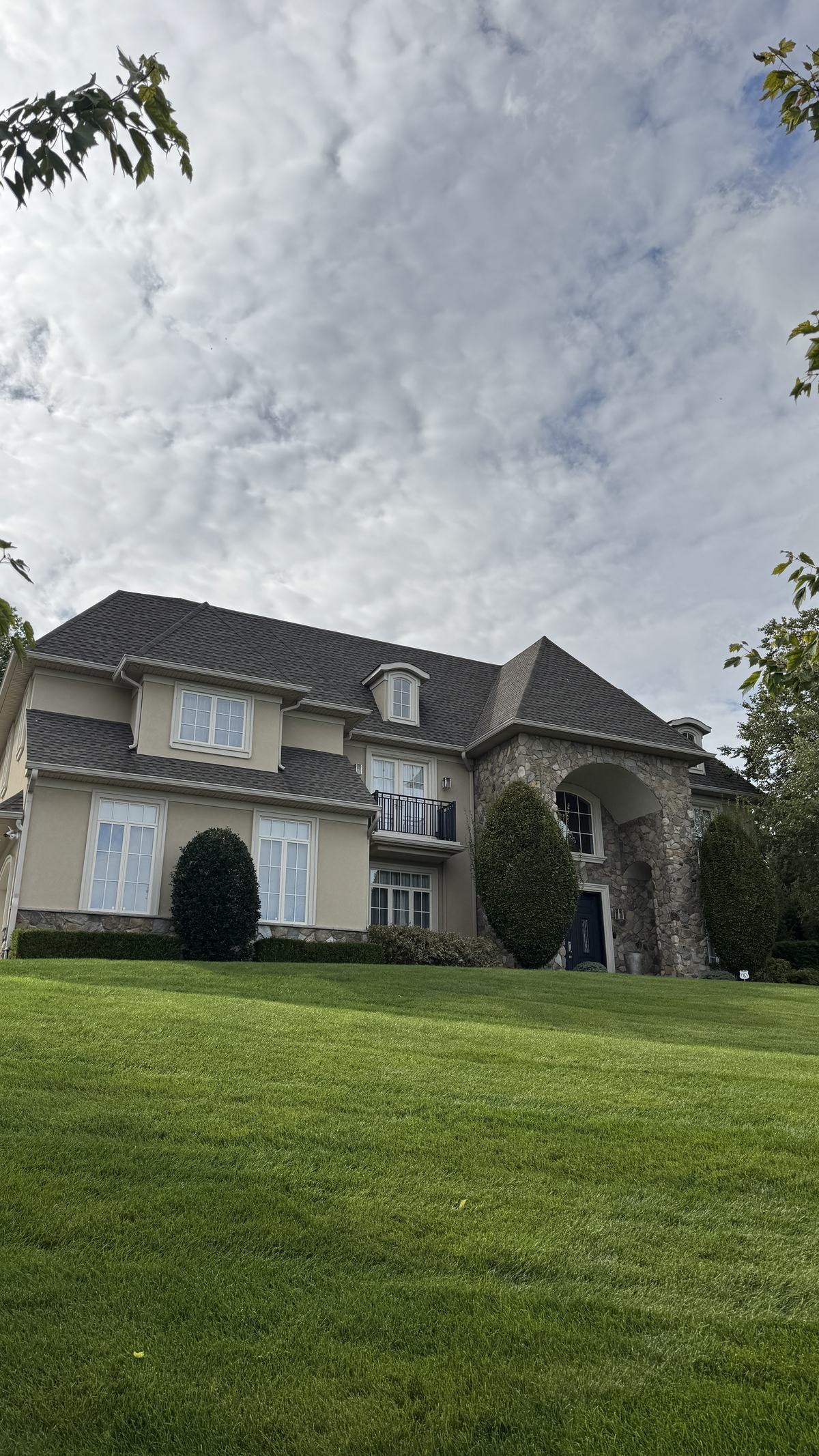
The question is not how old the roof is
Age is the number everyone reaches for, and on its own it decides very little. We have repaired twenty-two-year-old roofs that had another five good years in them, and we have told people with twelve-year-old roofs that the whole south plane needed to come off because it was never vented properly and cooked from underneath.
The real question is whether the roof has a failure at one point or a surface that is wearing out. Those are different problems with different answers, and they are easy to tell apart once you know what to look at.
A failure at one point is a repair. A surface that is wearing out is a replacement. Nearly every honest version of this decision comes down to which of the two you have.
Which side does your roof fall on?
Repair it
- The roof is under fifteen years old
- Water is coming in at one identifiable point
- The failure is at a flashing, boot, or valley rather than in the field
- The shingle surface still has its granules and lies flat
- The decking underneath is sound
- There is only one layer on the house
Replace it
- The roof is past twenty-five years, or past twenty for three-tab
- Leaks are showing up in more than one place
- Granules are consistently filling the gutters
- Shingles are curling, cupping, or cracking across a whole plane
- The decking is soft underfoot or delaminating
- There are already two layers on the house
Most roofs land clearly on one side. If yours is genuinely split down the middle, that usually means one plane is finished and the others are not, and there is a real conversation to have about doing the bad plane now and the rest in a few years.
The gutters tell you more than the roof does
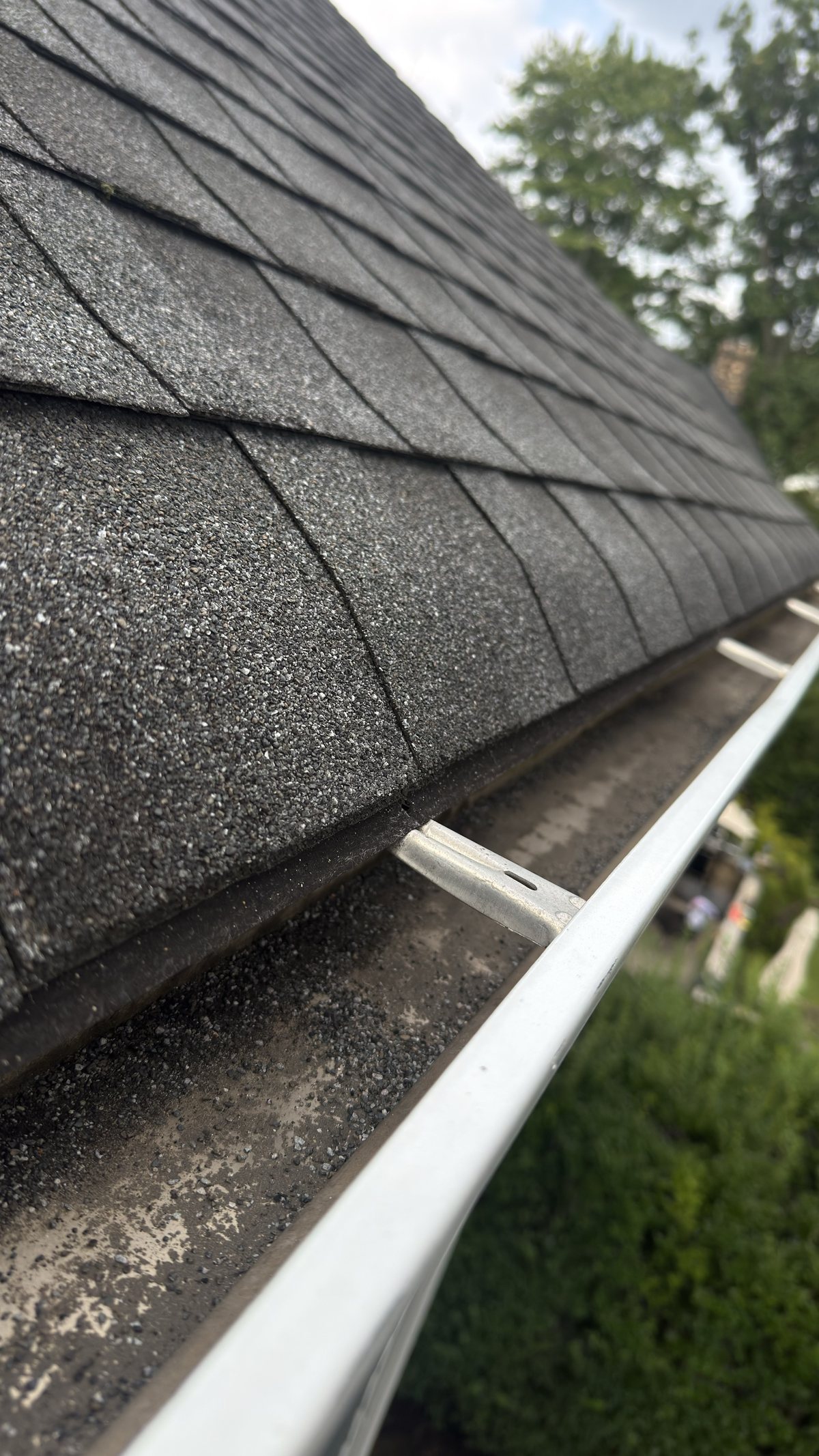
Granules in the gutter. On a new roof this is normal for a few months. On a twenty-year-old roof it is the surface giving up.
Those granules are the mineral coating that shields the asphalt from ultraviolet light. Once enough of them wash off, the asphalt underneath starts breaking down, and that process only goes one direction. You will see it on the roof as darker patches where the color has thinned, usually on the south and west facing planes first because they take the most sun.
This is the clearest signal we know of that repairs have stopped being a good investment. A roof shedding granules across a whole plane will keep finding new places to leak, and you will pay for each one.
The five things we check before we tell you
Age and shingle type
Architectural shingles realistically run twenty to thirty years in North Jersey. Three-tab, which is what most pre-1995 homes have, runs fifteen to twenty. Bad attic ventilation takes years off either number.
Granule loss
In the gutters, at the downspout outlets, and as thinning color on the roof itself. This is the surface-wear signal.
How many leak points
One is a repair. Two separate failures on the same roof usually means a third is coming.
Decking condition
Soft spots underfoot, delaminated plywood, staining on the underside in the attic. Rotted decking has to be replaced either way, and it changes the economics fast.
Number of layers
Code does not allow a third layer. If there are already two up there, any future work is a tear-off and that should factor into the decision now.
What a real replacement includes
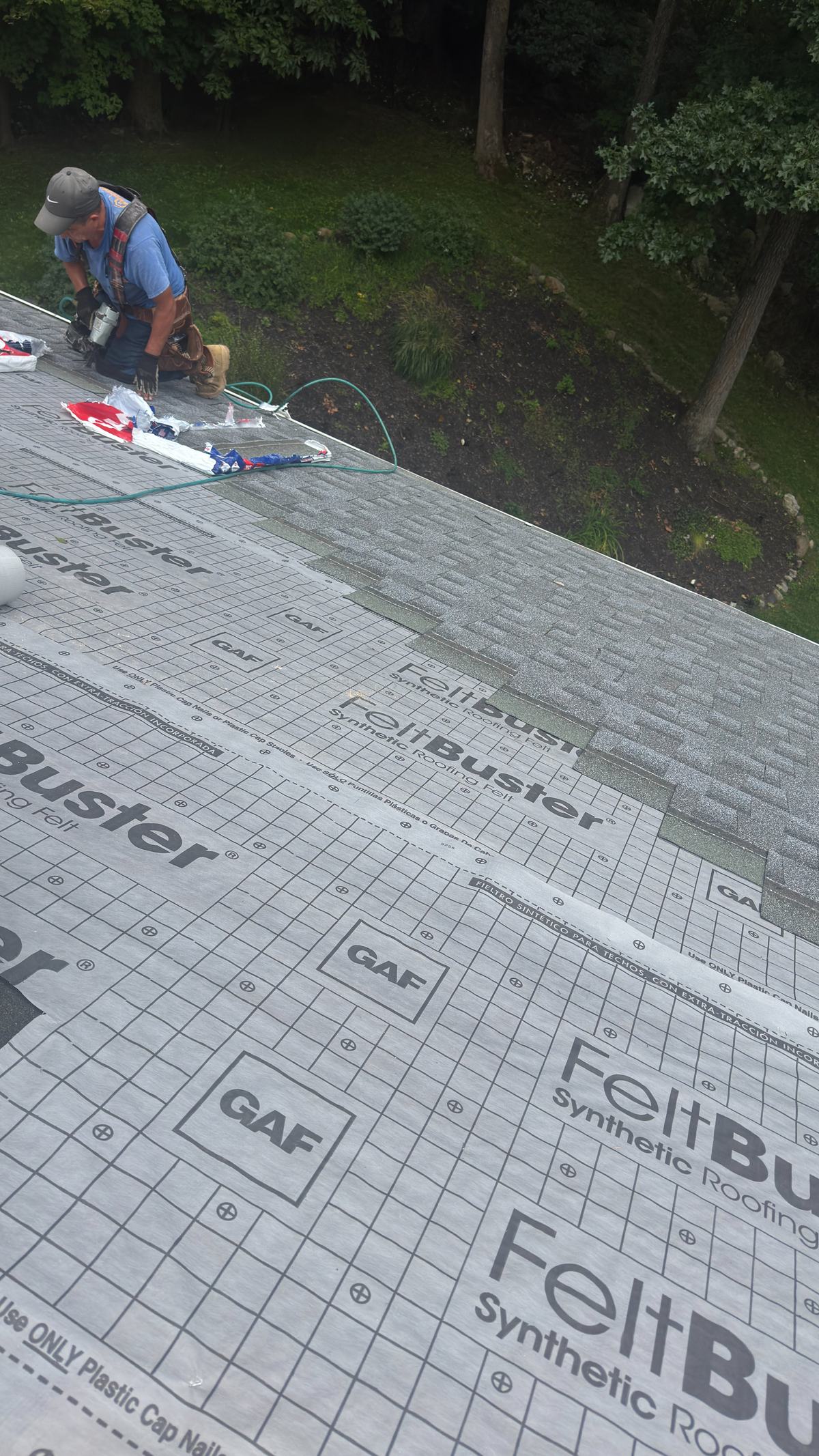
Synthetic underlayment going down over a stripped deck. The part nobody sees once the shingles are on, and the part that decides how the roof performs.
If a quote says “roof replacement” and gives you one number, you cannot compare it to anything. Here is what should be itemized, and what we put in writing before work starts:
- Tear-off of all existing layers, and disposal
- Deck inspection with a stated price per sheet for replacement
- Ice and water barrier at the eaves and in every valley
- Synthetic underlayment across the full field
- New drip edge on rakes and eaves
- New flashing at every penetration, not reused flashing
- Ridge venting, with intake ventilation confirmed at the soffits
- The shingle line and color, named
- Workmanship warranty terms, in writing
Red flags in a replacement quote
- A price given without anyone going on the roof or into the attic
- Pressure to sign today, or a discount that expires when they leave
- A large deposit up front. In New Jersey, a home improvement contract has specific requirements, and a contractor asking for most of the money before materials arrive is a problem
- No NJ Home Improvement Contractor registration number on the paperwork
- An offer to cover or waive your insurance deductible. That is insurance fraud, and it makes you a party to it
- Decking replacement quoted as an unknown with no per-sheet price
You can check any New Jersey contractor registration number through the Division of Consumer Affairs before you sign anything. Ours is 13VH09666100.
Repair or replace questions
How do I know if I need a roof repair or a full replacement?
Start with three numbers: the age of the roof, the number of separate places it is leaking, and the condition of the wood underneath. A roof under fifteen years old with one leak at a flashing point is a repair, almost always. A roof past twenty-five with leaks in more than one place and granules filling the gutters is finished, and repairing it is throwing money at a roof that will need replacing anyway. The middle years are where judgment matters, and where an honest contractor earns their fee by telling you which way it falls.
How long does an asphalt shingle roof last in New Jersey?
Architectural shingles realistically last twenty to thirty years here, with the wide range driven mostly by ventilation and sun exposure. A poorly vented attic cooks shingles from underneath and can take a decade off the life of a roof. South and west facing planes always fail first. Three-tab shingles, which is what you will find on most homes built before the mid-1990s, run shorter, closer to fifteen to twenty.
What does granule loss in the gutters mean?
Granules are the mineral coating that protects the asphalt underneath from ultraviolet light. Some shedding is normal in the first months after installation, when loose manufacturing granules wash off. Years later it means something different: the shingle is losing its protection and the asphalt underneath is being exposed. When you consistently find granules in the gutters and you can see darker patches on the roof where the color has thinned, that roof is in the last part of its life and repairs stop being a good investment.
Can you put a new roof over an old one?
Sometimes, and it is usually a bad idea even when it is allowed. Code does not permit a third layer, so if the home already has two you are tearing off regardless. Beyond that, layering over the old roof hides the condition of the decking, which is the one thing you most want to see, and it traps heat that shortens the life of the new shingles. It also adds significant weight. The cost saving is real but modest, and you give up the chance to catch rotted sheathing before you cover it up.
Is it worth repairing a twenty-year-old roof?
It depends on what is wrong with it. A twenty-year-old roof with an intact shingle surface and a single failed pipe boot is worth a two-hundred-dollar repair and will keep going. The same roof with granule loss across the south-facing plane, curling edges, and water showing up in two rooms is telling you it is done. The question is never really the age. It is whether the failure is at one point or across the surface.
Do I need a permit to replace my roof in New Jersey?
For a standard reroof on a detached one or two family home, no. Since March 2018 the New Jersey Department of Community Affairs classifies that work as ordinary maintenance, which is exempt from the construction permit requirement. Attached homes, townhouses, condominiums, buildings with three or more units, commercial buildings, and any job involving structural repair still require permits. Historic districts add a separate review that is not a construction permit but still has to be dealt with before work starts.
What should be included in a roof replacement quote?
Tear-off of all existing layers and disposal, inspection of the decking with a stated price per sheet for any that needs replacing, ice and water barrier at the eaves and in the valleys, synthetic underlayment across the field, new drip edge, new flashing at every penetration, ridge venting, and the shingle line and color in writing. A quote that says roof replacement and gives one number is not a quote you can evaluate or compare.
Permit and code requirements are current as of publication and can change. Confirm with your local building department before starting work.
Related
Not sure where the leak is coming from? Where roof leaks actually start.
Water coming in right now? Emergency roof repair.
Storm damage? Storm damage roof repair.
All articles
Get a straight answer on your roof
We go on the roof and into the attic before we quote. If it is a repair, we will tell you it is a repair. Free estimate, flat price in writing.
201-396-5509American Sons Professionals · GAF Master Elite® · NJ HIC #13VH09666100